The Sensenich Propeller – P/N 74DM6-0-60
The shortened Sensenich 74DM6 Propeller description can improve search visibility, while the complete part number should remain available for technical review.
The Sensenich Fixed-Pitch Propeller, Sensenich Aluminum Propeller, Fixed-Pitch Aluminum Propeller, and Aluminum Aircraft Propeller keywords describe important design and material characteristics.
The 74-Inch Aircraft Propeller, 60-Inch Pitch Propeller, Lycoming O-320 Propeller, and General Aviation Propeller keywords represent common dimensional, engine, and application searches associated with the model.
Clear terminology supports both search performance and responsible aviation-product presentation.
Reviewing P/N 74DM6-0-60 Markings
Complete identification reduces unsuitable purchases and gives maintenance professionals the information required for further review.
The serial number should match all supplied invoices, manufacturer documents, inspection records, and release paperwork.
Evaluating an Unused Sensenich Propeller
The phrase new and never installed generally means that the propeller has not been operated in flight or permanently mounted on an aircraft.
New, Never Installed.
Evaluating General Aviation Propeller Requirements
The 74DM6-0-60 should be selected using applicable technical data rather than general claims about improved climb or cruise performance.
Incorrect dimensions can produce operational concerns even when the propeller fits physically on the flange.
Inspecting the Sensenich Aluminum Propeller
Metal construction does not eliminate the possibility of fatigue, corrosion, impact damage, improper material removal, dimensional loss, or storage deterioration.
Factory paint and protective coating should be checked for lifting, bubbling, scratches, abrasions, discoloration, and exposed metal.
Avoiding Unverified Propeller Size Claims
The 74-inch diameter description should be confirmed through the complete model designation, manufacturer data, available records, and suitable physical measurement.
A difference between documented and measured dimensions should be investigated before installation.
Verifying the 74DM6-0-60 Pitch
Pitch influences theoretical forward movement, engine loading, achievable RPM, climb behavior, and cruise characteristics.
A never-installed propeller should still be reviewed for shipping distortion, impact, or manufacturing-record consistency.
Avoiding Universal O-320 Compatibility Claims
The Lycoming O-320 engine family includes different models, power ratings, flange configurations, operating limits, and aircraft applications.
The engine and propeller combination must remain within applicable RPM and power limitations.
Protecting the Matched Two-Blade Design
A Two-Blade Aircraft Propeller should be evaluated as a complete matched assembly rather than as two independent blade components.
Storage supports should protect both blades without applying uneven pressure.
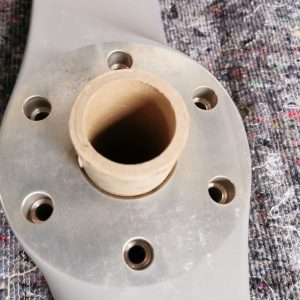
Evaluating Mounting Holes and Surfaces
A genuinely never-installed propeller should not show unexplained fretting, bolt loading, or flange-contact patterns.
Fasteners should not be selected solely by visual appearance, basic diameter, or thread size.
Leading-Edge and Blade-Surface Inspection
Blade faces and backs should be examined for pressure marks, stains, chemical exposure, paint defects, surface distortion, and trapped contamination.
Protective wrapping can sometimes conceal moisture staining or abrasion caused by movement inside the packaging.
Preserving an Unused Aircraft Propeller
Complete corrosion evaluation supports responsible purchasing.
Periodic inspection can identify developing coating or environmental concerns.
Supporting Installation Eligibility
The buyer should confirm the data plate, serial number, production information, conformity records, release documents, and exact approved aircraft application.
A release certificate or service tag belonging to another serial number does not establish the condition of the offered unit.
Propeller Traceability and Documentation
Original purchase paperwork may help establish the never-installed history.
Paperwork should not be interpreted beyond its actual scope or current relevance.
Buying the Sensenich 74DM6-0-60
The buyer should obtain enough information for a qualified propeller specialist or aviation mechanic to review the component.
- Request clear photographs of the data plate, blade faces, blade backs, leading edges, trailing edges, tips, hub, mounting face, bolt holes, packaging, and storage supports.
- Confirm the manufacture or purchase date, storage duration, environmental conditions, preservation method, ownership history, and absence of operating time.
- Retain photographs, serial information, measurements, purchase records, inspection reports, release documents, and freight paperwork with the aircraft project file.
Protecting a New Two-Blade Propeller in Transit
Professional packaging helps preserve the never-installed condition.
Pre-shipment photographs can document the blades, hub, packaging, identification, and included parts before collection.
Long-Term Aluminum Propeller Storage
The propeller should not be placed where tools, vehicles, machinery, or personnel can strike it.
Identification labels, serial records, release documents, and included hardware should remain associated with the correct propeller.
Completing the Propeller and Spinner Assembly
Incorrect bolts, unsuitable washers, damaged threads, or improvised spacers should not be used.
Spinner components should maintain suitable alignment, attachment, and clearance without causing stress or imbalance.
Authorized personnel should complete all required maintenance records and return-to-service actions.
Maintaining the Leading Edges and Finish
Unapproved filing or sanding can remove excessive material and alter the blade geometry.
The propeller should receive additional inspection after a suspected strike, sudden engine stoppage, overspeed, severe vibration, loose installation, lightning-related concern, or transportation impact.
Commercial Value of a New Sensenich Propeller
The commercial value of a new Sensenich propeller depends on exact identification, serial number, manufacturing date, storage history, dimensional conformity, factory finish, inspection status, traceability, and included accessories.
The lowest advertised price may not represent the lowest installed cost when hardware, records, or compatibility information are incomplete.
Choosing the Sensenich Propeller – P/N 74DM6-0-60
The Sensenich Propeller – P/N 74DM6-0-60
The strongest purchasing decision begins with confirming the full model designation, serial number, manufacturing details, 74-inch diameter, 60-inch pitch, blade count, hub, bolt pattern, aircraft applicability, engine compatibility, storage history, physical condition, and documentation.
Whether the product is described as a 74-Inch Aircraft Propeller, 60-Inch Pitch Propeller, Lycoming O-320 Propeller, or General Aviation Propeller, aircraft-specific applicability remains essential.
With responsible purchasing, dimensional verification, corrosion and more info damage inspection, correct hardware, tracking, and balance evaluation, the component can remain a valuable aviation asset.